

Do You Need Planning Permission For A Conservatory?
- 20 April 2026
- News
Adding a conservatory is one of the most popular ways to improve your home. It creates extra space, brings in more natural light, and gives you a place to relax year-round.
Whether you are planning a quiet space to unwind or a bright area for family time, a conservatory can completely transform how you use your home.
However, before you begin choosing designs or materials, there is one key question many homeowners ask first: Do you need planning permission for a conservatory?
At first, this can feel confusing. There are rules to follow, limits to consider, and requirements that vary depending on your property. The good news is that, in many cases, you can build a conservatory without needing planning permission.
In this guide, we will break everything down in simple terms so you know exactly what to expect before you start your project.
Do You Need Planning Permission For A Conservatory? Your Questions Answered
If you are thinking about installing one of our conservatories in Milton Keynes, understanding the planning rules early on will save you time and stress later.
Planning permission is not always required, but there are clear guidelines you must follow. These rules fall under permitted development, which allows certain home improvements to proceed without formal approval.
That said, not every project qualifies — which is why it is important to understand the details before you begin.
In this guide, we will cover:
- Do I Need Planning Permission For A Conservatory?
- Do You Need Planning Permission To Change A Conservatory Roof?
- How Large Can A Conservatory Be Without Planning Permission?
- How Close Can You Build A Conservatory To A Boundary?
- Do You Need Building Regulations For A Conservatory?
Do I Need Planning Permission For A Conservatory?
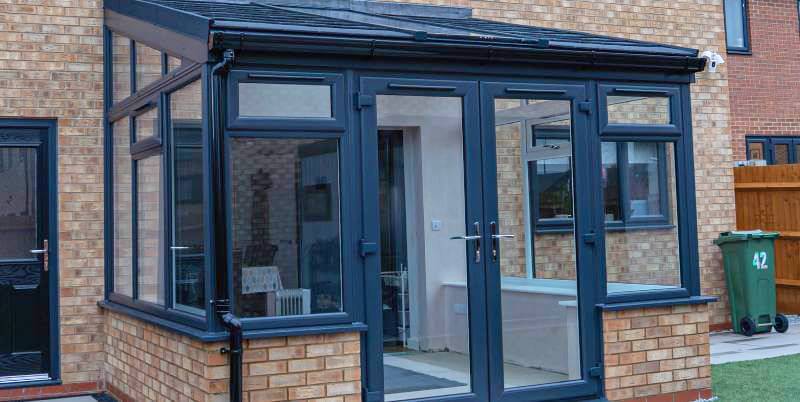
In most cases, you do not need planning permission to build a conservatory. This is because many projects fall under permitted development rights.
Permitted development allows homeowners to extend their property without going through the full planning process, provided certain conditions are met.
You can explore these rules in more detail on the Planning Portal, which provides clear, up-to-date guidance for homeowners.
When You DON’T Need Planning Permission
You will usually not need planning permission if your conservatory meets the following conditions:
- Location: Built at the rear of the property
- Size: Extends no more than 3 metres (semi-detached) or 4 metres (detached)
- Height: No higher than 4 metres
- Boundary rules: Eaves under 3 metres if within 2 metres of a boundary
- Land use: Covers less than 50% of the total land around the original house
- Property type: Not on designated land such as a Conservation Area or a listed building
- Side extensions: Single-storey and no wider than half the original house
These guidelines are designed to keep extensions in proportion and avoid impacting neighbouring properties.
When You DO Need Planning Permission
There are some situations where planning permission will be required:
- If you exceed the height or size limits
- If the conservatory is built at the front of your home
- If your property is a flat, maisonette, or listed building
- If your permitted development rights have been removed
If you are unsure, it is always best to check before starting. At Crown Windows, we help guide you through this process so everything is clear from the beginning.
Do You Need Planning Permission To Change A Conservatory Roof?
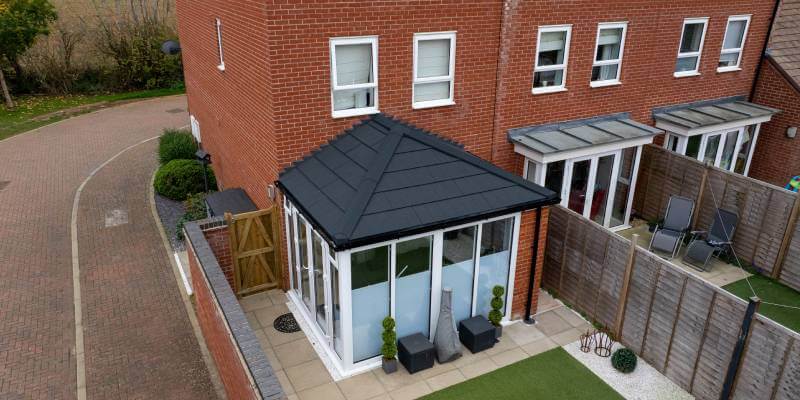
Upgrading a conservatory roof is becoming increasingly popular, especially among homeowners looking to improve comfort and energy efficiency.
In most cases, you do not need planning permission to change your conservatory roof, as long as you do not increase the overall size or height of the structure.
However, there is one key factor to keep in mind — building regulations.
Key Considerations When Changing A Roof
- Building Regulations: You will almost always need approval to ensure the structure is safe and properly insulated
- Height limits: The new roof must not exceed the current height
- Structural checks: The existing frame must be able to support the new roof
- Exceptions: Listed buildings or conservation areas may still require planning permission.
You can find more information on building regulations through theUK government website, which outlines what is required for structural changes.
Many homeowners also choose to upgrade their glazing at the same time. Investing in high-quality double glazing in Milton Keynes can make a huge difference in keeping your conservatory warm in winter and cool in summer.
How Large Can A Conservatory Be Without Planning Permission?
Size is one of the most important factors in planning rules.
As long as your conservatory stays within certain limits, you can usually build without needing planning permission.
Key Size Restrictions For Permitted Development
- Maximum height: Must not exceed 4 metres
- Rear extension depth:
– Up to 4 metres for detached houses
– Up to 3 metres for semi-detached or terraced houses - Side extension width: No more than half the width of the original house
- Boundary rule: If within 2 metres of a boundary, eaves must not exceed 3 metres
- Area limitation: Must not cover more than 50% of the land around the original house
These limits are designed to ensure your conservatory remains in proportion with your home and does not negatively impact surrounding properties.
If you are planning something larger, you may still be able to proceed — but you will need to apply for planning permission first.
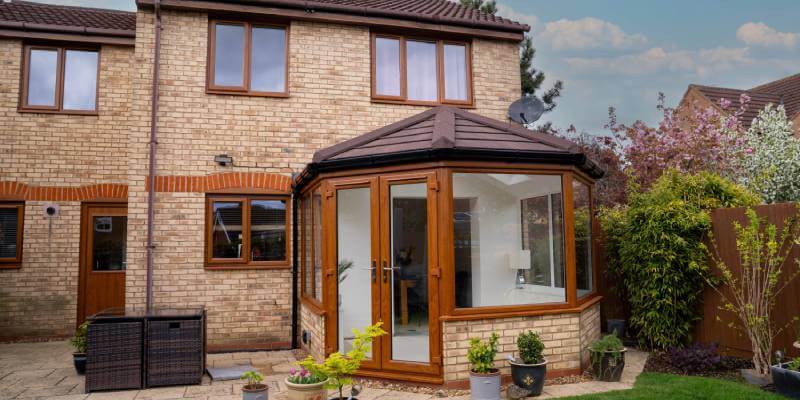
How Close Can You Build A Conservatory To A Boundary?
Building close to a boundary is often possible, but there are a few important rules to follow.
Key Boundary & Planning Considerations
- If your conservatory is within 2 metres of a boundary, the eaves height must not exceed 3 metres
- The total height must remain under 4 metres
- The conservatory must be located at the rear of the property
Additional Things To Keep In Mind
- If you are building directly on or near a shared boundary, you may need to follow the Party Wall etc. Act 1996
- This may involve notifying your neighbours before work begins
- It is always a good idea to communicate plans early to avoid disputes
If your home is in a conservation area or is a listed building, extra rules may apply. In these cases, guidance from Historic England can be very helpful when planning your project.
Do You Need Building Regulations For A Conservatory?
Planning permission and building regulations are often confused, but they serve different purposes.
Even if your conservatory does not require planning permission, it may still need to meet building regulations.
When You DON’T Need Building Regulations
Most conservatories are exempt if they:
- Are built at ground level
- Are separated from the main house by external doors or walls
- Have their own independent heating system
When You DO Need Building Regulations
You will usually need approval if your conservatory:
- Is connected to your home’s heating system
- Has a solid or tiled roof
- Removes the original external doors or walls
- Is not built at ground level
- Affects safety features such as escape routes
Building regulations ensure your conservatory is safe, structurally sound, and energy efficient.
Bringing Your Conservatory Plans To Life
Adding a conservatory is a fantastic way to improve your home, increase your living space, and create a bright, welcoming environment for you and your family.
The key takeaway is that most conservatories can be built without planning permission, provided they comply with permitted development rules. However, factors such as size, location, and structural changes can all affect what is required.
By understanding these guidelines from the start, you can avoid delays and make the process much smoother.
At Crown Windows, we have years of experience designing and installing conservatories that not only look great but also meet all planning and building requirements. Whether you are starting from scratch or upgrading an existing space, our team is here to help you every step of the way.
If you are ready to transform your home with a new conservatory, get in touch with Crown Windows today and let’s create a space you will enjoy for years to come.